
A proposal by the joint venture between Tata Motors and Fiat to set up a facility to manufacture the world's most famous small diesel engine -- the 1.3 multijet -- had been rejected by Japan's largest maker of minicars, Suzuki Motor Corporation.

The top six auto brands are: Maruti Suzuki, Hyundai, Tata Motors, Toyota, Kia and Mahindra & Mahindra.

Auto industry volumes have grown by 2.5 per cent overall, led by domestic sales of three-wheelers, two-wheelers and passenger vehicles (PVs) in the first quarter of this financial year. Analysts predict an 18 per cent growth in revenues for automotive original equipment manufacturers (OEMs) and profit growth of 69 per cent year-on-year (YoY). However, on a sequential basis, a decline in revenues as well as earnings before interest, taxes, depreciation, and amortisation (Ebitda) margins is expected.
In the Sensex pack, Asian Paints, Larsen & Toubro, Titan, IndusInd Bank, Bharti Airtel, Power Grid, Bajaj Finserv, Infosys, HDFC Bank and HDFC were the major laggards. On the other hand, Axis Bank, Tata Motors, ITC, State Bank of India, Tata Steel and Sun Pharma were among the gainers.
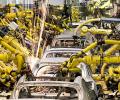
The sharp increase in commodity prices on account of the Russia-Ukraine war has put automakers in a fix. After the frequent price hikes in the current fiscal, manufacturers fear that any more price increases may further dent the already weak demand in certain segments. "We have taken several hikes and cannot immediately do it again. "We will have to closely watch the situation and act accordingly," said an official at an auto firm, declining to be identified. Even for companies like Tata Motors Passenger Vehicles, which has had a strong volume run and a robust order book, passing on the entire costs has been tough.

Among the Sensex firms, Bajaj Finance, Bharti Airtel, Maruti, Bajaj Finserv, HCL Technologies, Titan, Hindustan Unilever, JSW Steel, UltraTech Cement, State Bank of India and Reliance Industries were the major laggards.

Bajaj Auto has become the top player in India's electric vehicle market by monthly volumes, across all categories, with over 25,000 sales and registrations in September. This comes on the back of a big push in expanding distribution by the company and steady demand of electric three-wheelers. In September, the company - according to the latest Vahan data - recorded sales of 17,570 electric two-wheelers, 4,575 three-wheelers, and 3,000 Yulu low-speed electric bikes (based on company sales numbers), which do not require a licence and are not registered on Vahan.

Among the 30-share Sensex pack, State Bank of India, Reliance Industries, Hindustan Unilever, NTPC, Larsen & Toubro, Nestle India, Power Grid, ITC, JSW Steel and Sun Pharmaceuticals were the major gainers. On the other hand, HDFC Bank, Titan, Mahindra & Mahindra, IndusInd Bank, UltraTech Cement, Tata Motors, HCL Technologies and Asian Paints were among the laggards.
Maruti, Tata Motors and Ford Motor India have already made similar announcements.
The Tata Motors-Jaguar-Land Rover combine, with a valuation of $8.45 billion now reigns supreme among the most valuable corporate brands in India.
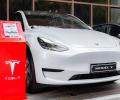
With India's EV penetration at just 2.5 per cent, the market presents an opportunity -- provided Tesla gets its pricing right.

'From data on enquiries, we can build what we call a data lake or a data warehouse where data is classified into various cohorts and then we use AI and ML tools to predict demand down the line.'
The Tata group companies are now more valuable than all the listed central public sector undertakings (CPSUs) or companies in the country. The key 20 listed Tata companies ended the 2021 calendar year with a combined market capitalisation of Rs 23.36 trillion, ahead of the 70 listed CPSUs, which had a combined m-cap of Rs 23.2 trillion. In comparison, these CPSUs had a combined market capitalisation of Rs 16.7 trillion at the end of December 2020 against the Tata group firms' combined m-cap of Rs 15.7 trillion.
Until recently, the JV, Fiat India Automobile, was languishing with heavy losses.

Amid slowing volume sales among India's major automakers, Toyota Kirloskar Motor (TKM) has defied the trend with strong growth, driven by demand for hybrid vehicles and a reliable product line up. The company expects this momentum to continue in 2025. "The overall response to our cars has been fabulous. So, we foresee the same momentum in 2025 as well," Sabari Manohar, vice-president, sales-service-used car business, TKM, said.
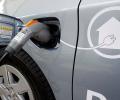
At a time when consumers increasingly embrace green mobility solutions, it is not electric cars but hybrids that are taking the lead, as automotive sales data indicate. Since January, 64,097 electric cars have been sold compared to 266,465 hybrids, according to data from the ministry of road transport and highways' Vahan dashboard. Hybrid car sales have surged from 4.42 per cent of the 4.1 million cars sold in calendar year 2022 to 7.2 per cent this year.

Nano's production though continues unhindered despite mounting losses

When Gensol Engineering made its public market debut through a small and medium enterprises (SME) initial public offering (IPO) in September 2019, its promoters held a commanding 96 per cent stake. Now, that figure has shrunk to a "negligible" fraction.

Among the Sensex firms, IndusInd Bank, Power Grid, Tata Motors, Bajaj Finance, NTPC, HDFC Bank, Reliance Industries, Nestle and Kotak Mahindra Bank were the major gainers. Infosys, State Bank of India, Tata Steel, Hindustan Unilever and Titan were the major laggards.

Diwali fireworks are expected to continue on Dalal Street next week, with four companies collectively seeking to mobilise over Rs 6,600 crore through initial public offerings (IPOs). In terms of the amount raised, this is poised to be the busiest week of calendar year 2023. Tata Technologies (Tata Tech), a subsidiary of Tata Motors, could lead the charge with an IPO projected to be over Rs 2,900 crore. This will mark the first maiden share sale by a Tata Group firm in nearly two decades.

From the 30-share pack, Adani Port, Bharti Airtel, Asian Paints, IndusInd Bank, Bajaj Finserv, Reliance Industries, Infosys, UltraTech Cement, HDFC Bank, HCL Technologies and ICICI Bank were among the laggards. Tata Motors, Axis Bank, Maruti, Larsen & Toubro, ITC and Tata Steel were among the gainers.
With the Indian car market growing at the rate of 30 per cent no car maker wants to miss the opportunity.

'The path beyond diesel is not going to be clear. It is really going to be dependent on applications.'

Long have I waited for a car to replace the Tata Safari feel in driving, and this updated version of the Tata Harrier is just IT, exclaims Rajesh Karkera/Rediff.com.

'Selling could further intensify and take the index towards 22,800-22,750 in the near-term.'
Among the Sensex components, Mahindra & Mahindra, Bharti Airtel, Tech Mahindra, Titan, Infosys, JSW Steel, Bajaj Finserv, HDFC Bank, Larsen & Toubro and Kotak Mahindra Bank were the major gainers. Maruti, State Bank of India, Power Grid, Tata Motors and IndusInd Bank were the laggards.

The US Fed interest rate decision, ongoing quarterly earnings, macroeconomic data and FII trading activity are the major triggers that will drive stock markets this week, analysts said. Investors would also track global market trends and the movement in global oil prices for further cues. "This week, the focus will shift to global cues, particularly the US markets," Santosh Meena, Head of Research, Swastika Investmart Ltd said.
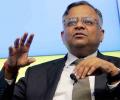
Tata Group chairman Natarajan Chandrasekaran on Thursday said the group's recently launched super app Neu is on an open architecture and it will host non-group brands as well. The Tatas finally launched its super app Tata Neu on April 7, after piloting it for months, but the group chairman claimed there was no delay in the commercial launch. Stating that the app has received an overwhelming response in the past seven days of going live, Chandrasekaran said the app is on an open architecture and will host products and services from non-Tata group companies.
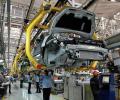
Automobile manufacturers are likely to report strong numbers for the September quarter of Financial Year 2023-24 (Q2 FY24), riding on growth across segments and offset by a marginal drop in overall two-wheeler (2W) volumes. Higher average selling price (ASP) year-on-year (YoY), which was necessitated by price hikes taken by original equipment manufacturers (OEMs), and an improved product mix will also aid revenues and margins. Moreover, commodity prices are down on a YoY basis, leading to higher margins in earnings before interest, taxes, depreciation and amortisation (Ebitda).

This is not the first EV that Mercedes would be making in India though. It has been making the EQS sedan here for the last 18 months, and has sold 500 units of the car.

For the first time in history, the luxury car market is poised to cross the sales mark of 50,000 units in 2024, with Mercedes leading the way

The demand for buses largely remained robust in 2023, driven by the increasing need for public mobility and replacement. Ashok Leyland Limited (ALL) recorded a 64 per cent year-on-year increase in sales of medium and heavy commercial vehicle (MHCV) buses during the April-to-December period of 2023 to 11,216 units. Volvo Eicher Commercial Vehicles (VECV) posted 24.7 per cent sales growth between April and December for light and medium-duty buses, and 36.9 per cent growth for heavy-duty buses.

From the Sensex basket, Mahindra & Mahindra, Tata Motors, NTPC, HCL Technologies, Larsen & Toubro, Infosys, Tech Mahindra and State Bank of India were the major laggards. Bharti Airtel, Bajaj Finance, Bajaj Finserv, Tata Consultancy Services and IndusInd Bank were among the gainers.

Famous and long believed to be trusted Indian brands have wilted against foreign brands, says Mohan Guruswamy.
Jaguar and Land Rover, the UK based carmakers, are to set up dealership networks in India soon as they seek to use ties with Tata Motors, their new owner, to find new markets.
Among Sensex firms, Bajaj Finserv and Bajaj Finance fell by over 4 per cent each. Nestle, Infosys, Tata Consultancy Services, Wipro, UltraTech Cement, HCL Technologies, Larsen & Toubro and Hindustan Unilever were the other major laggards. Bharti Airtel, State Bank of India, Sun Pharma and NTPC were among the gainers.
The company planning to have a larger push to small car even as sales continue to remain subdued.

Media report says unfavourable excise structure, large investments are the main reasons

Fiat Group Automobiles India is the Indian arm of Italian automobile major Fiat. Asked when the financial services division is likely to be rolled out, he said, "We are planning to do that as part of our announcement in April.
